
Football Training Equipment for Academies: A Practical Kit List by Session Type
A working kit list for academy and grassroots football: cones, ladders, mannequins, mini-goals, rebound boards and what each is actually useful for in a session, with notes on quality vs price.
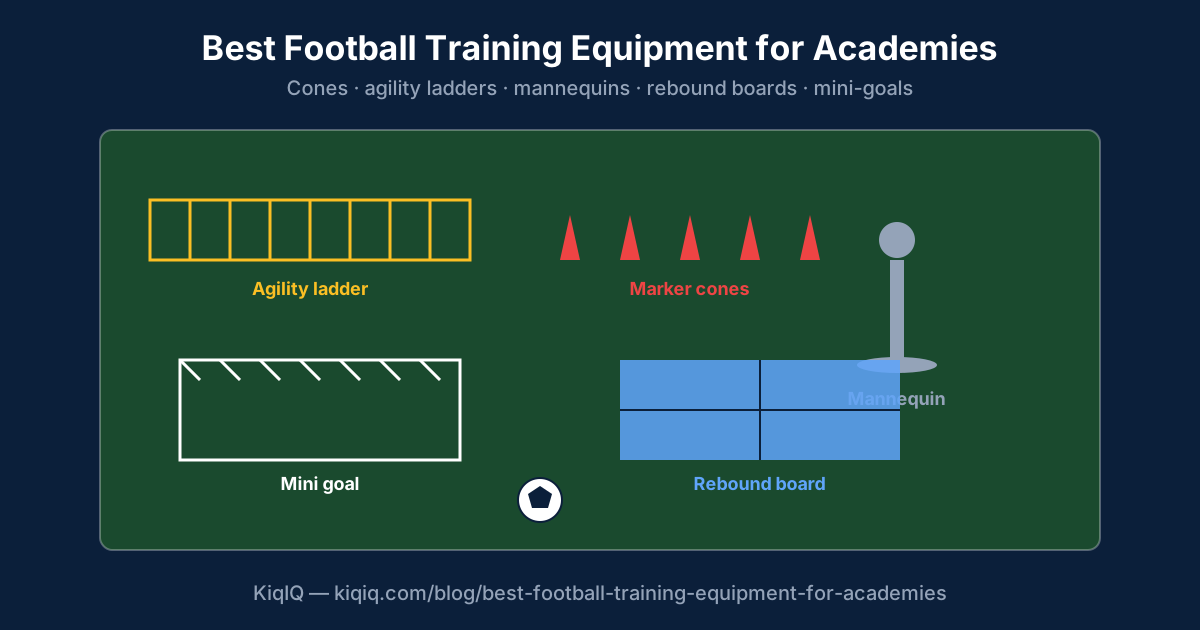 Tap to enlarge
Most academy and grassroots coaches buy equipment in two ways: panic-purchases the night before a session, or large bundle deals that arrive with items that gather dust. A small, deliberate kit aligned to the session types the coach actually runs covers 90% of the technical and physical work a youth player needs. This guide walks through the categories and the use case for each item, with notes on what is worth quality money and what is fine as the cheapest option on the shelf.
Cones and discs: the cheapest, most-used item
Marker cones and flat discs are the foundation of any training kit. They mark grids, channels, gates and zones; they substitute for opponents in unopposed drills; they define start and finish lines for fitness work. A working kit needs a minimum of 50 small flat discs in three or four colours (typically red, yellow, blue, green) and 10-15 traditional tall cones for sightlines and corner markers.
Quality is not particularly important here: the cheapest plastic discs and cones last 2-3 seasons of regular use before they crack. Buy in bulk and replace as needed rather than paying a premium for "professional" cones that don't obviously perform better. The mistake to avoid is buying only one colour: multi-colour discs let coaches set up multi-station drills and condition exercises where players must run to a specific colour on command, which compounds the cognitive load alongside the physical task.
Quick question
What is the most-used item in a well-run academy equipment bag?
Coordination ladders: agility and footwork
Coordination ladders are flat ladders laid on the ground for footwork patterns: single-foot in, two-foot in, lateral shuffle, in-out, hop-and-stick. They are useful for the warm-up and for the technical-footwork phase of academy sessions with younger age groups (U-7 to U-12), where the neuromuscular benefit of unfamiliar foot patterns is highest.
A practical kit for an academy is two or three ladders so multiple players can work in parallel during a warm-up. The Football Training anti-slip coordination ladder kit is a representative example of the sub-£30 multi-piece kits that include the ladder along with associated agility cones, hurdles, and a carry bag, useful for academies that want the full footwork-station setup in one purchase rather than sourcing each item separately. Quality matters slightly more here than for cones; ladders that aren't anti-slip slide on wet grass and cause stumbles.
A note of caution: the agility-ladder research base is weaker than the marketing suggests. Ladders develop within-pattern foot speed but do not have a clear transfer effect on change-of-direction ability in match-realistic situations. Use them for warm-up and U-7/U-12 footwork variety, not as a primary tool for older age groups working on football-specific agility.
Mannequins and dummies: for unopposed pattern work
Free-standing mannequins (or weighted-base dummies) substitute for opponents in unopposed drills: set-piece routines, pattern-of-play rehearsal, dribbling around obstacles. They allow the coach to drill a specific tactical pattern with the spacing fixed so the players can repeat the movement without the variability that a real defender introduces.
A working kit is 4-6 mannequins. Free-standing models with sand or water-fillable bases are the most stable; pop-up sock-mannequins are cheaper but blow over in light wind. For an academy that runs set-piece work weekly, the heavier-base mannequins repay the higher price. For a grassroots team that uses them occasionally, the lighter pop-ups are sufficient.
Mini-goals and pop-up goals: for small-sided games
Small-sided games are the workhorse of modern football coaching, and small-sided games need small goals. A working kit is a minimum of four pop-up goals (typically 1.2 metre wide or 1.8 metre wide) so two simultaneous 4v4 or 5v5 games can run on a quarter-pitch. Heavier free-standing mini-goals with proper nets are sturdier but slower to set up; pop-ups deploy in 30 seconds and pack down to a flat disc.
The trade-off: pop-ups are not as solid as free-standing goals, and players quickly learn to chip them rather than shoot through them, which slightly distorts shooting technique. For a session focused on finishing technique, free-standing goals with nets are better. For a session focused on small-sided possession and tactical pattern work where finishing is incidental, pop-ups are fine.
Rebound boards and walls: solo technical work
Rebound boards are angled wooden or plastic boards that return a passed ball to the player. They are useful for solo passing repetition, first-touch work, and goalkeeper distribution drills. An academy that runs individual development time alongside team sessions benefits from 2-3 rebound boards; an academy that runs only team sessions probably doesn't need them at all.
Quality matters here, cheap plastic boards warp in sunlight and stop returning the ball at a consistent angle. The marginal cost of a proper wooden or rigid-plastic board is repaid by the longer service life. For goalkeeper-specific work, dedicated rebound nets with multiple angled targets are a separate category and worth the additional spend if the academy has multiple goalkeepers training in parallel.
What to buy first if the budget is small
A minimum viable kit for a single-team grassroots coach: 50 multi-colour flat discs, 10 traditional cones, one coordination ladder, four pop-up goals, six bibs in two colours. Total cost is typically £100-150. This kit covers warm-up, technical-footwork, small-sided games and conditioning work: the four largest blocks of a typical training session.
Additions in priority order: mannequins (for set-piece and pattern work), free-standing mini-goals with nets (for finishing-focused sessions), rebound board (for solo technical work), additional bibs in additional colours (for multi-team drills). Resist the temptation to buy specialist items (speed parachutes, resistance bands, agility rings) until the basic kit is in regular use, most specialist equipment sits unused in coaches' kit bags because the sessions that justify them are not on the weekly plan.
- Cones and discs: 50 multi-colour discs + 10 tall cones. Buy cheap, replace as needed.
- Coordination ladder: 2-3 ladders for warm-up and U-7/U-12 footwork.
- Mannequins: 4-6 free-standing for set-piece and pattern work.
- Mini-goals: 4 pop-ups for small-sided games, free-standing for finishing sessions.
- Rebound board: wooden or rigid plastic, only if individual development time is on the plan.
- Bibs: minimum 12 bibs in two colours; add more colours as multi-team drills grow.
Frequently asked questions
- What is the minimum equipment a football coach needs?
- A working minimum is 50 multi-colour flat discs, 10 traditional cones, one coordination ladder, four pop-up goals, and six bibs in two colours. Total cost is typically £100-150. This covers warm-up, technical-footwork, small-sided games and conditioning work, the four largest blocks of a typical training session.
- Are coordination ladders worth buying for an academy?
- Yes for warm-up and for U-7 to U-12 footwork variety, where the neuromuscular benefit of unfamiliar foot patterns is highest. Less useful as a primary tool for older age groups working on football-specific agility, the research base for ladder-based agility transfer to match situations is weaker than the marketing suggests.
- Should I buy pop-up goals or free-standing mini-goals?
- Both, ideally. Pop-ups deploy in 30 seconds and are great for small-sided possession and tactical pattern work where finishing is incidental. Free-standing goals with proper nets are better for sessions focused on finishing technique, because players learn to shoot through them rather than chipping over the soft top edge of a pop-up.
- What's the most over-rated piece of football training equipment?
- Speed parachutes and resistance harnesses. They look impressive, are expensive, and the evidence that they meaningfully improve match-realistic acceleration in already-conditioned players is weak. Most academy and grassroots coaches get more value from spending the same money on additional bibs, mannequins or rebound boards that actually fit into their weekly session plan.
References
Key terms in this article
Ask KiqIQ a follow-up
Get a live, data-driven answer powered by our live data feeds + KiqIQ's Poisson model. Try one of these prompts or write your own.
Part of pillar
Player Development
See every article in this knowledge pillar →
Related
Reviewed by a KiqIQ editor before publication. Spotted an error? Email editor@kiqiq.com. We follow our Corrections Policy.