
Ajax Shirt History: The Iconic Red Stripe and Amsterdam Identity
Ajax Amsterdam's shirt history: the wide red panel on white, the Total Football 1970s European Cup wins, the Cruyff era, and manufacturer changes through Le Coq Sportif, Umbro, and Adidas.
 Tap to enlarge
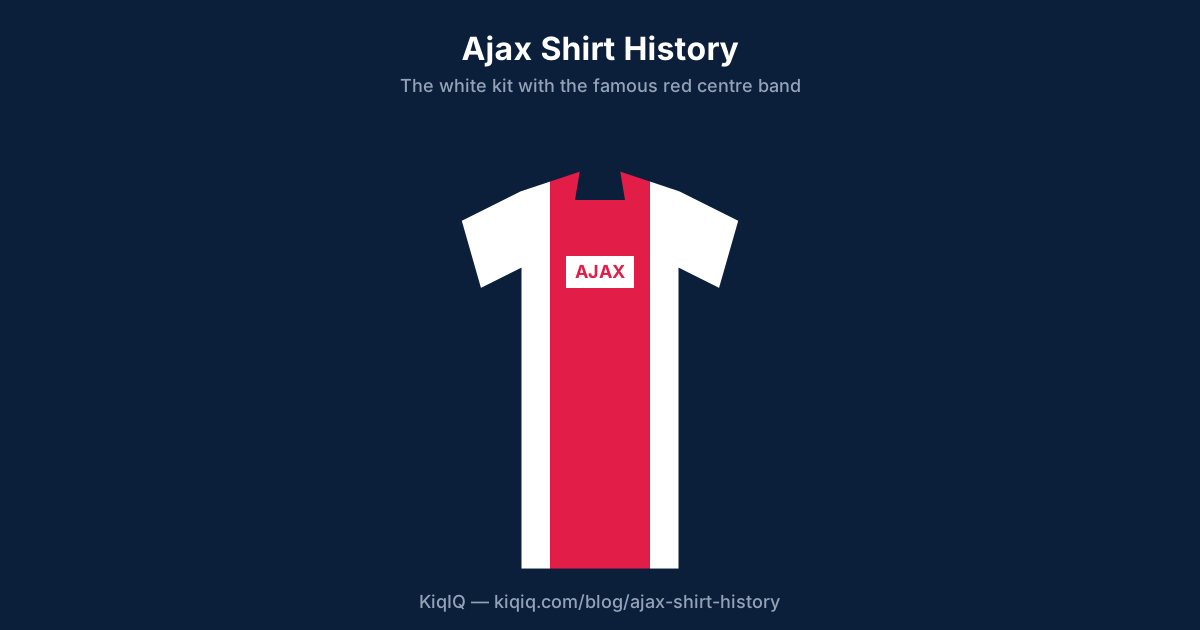
Ajax's home shirt is one of the most-recognised designs in world football: a wide vertical red panel down a white base, with the famous Ajax wordmark and city of Amsterdam crest. The design has been the club's heritage anchor since the early 20th century and has carried Ajax through every era of Dutch football, the Total Football revolution of the 1970s, the Van Gaal European Cup of 1995, and the modern Adidas partnership that has produced some of the most-collected shirts in the European market.
The founding design: a wide red panel on white
AFC Ajax was founded on 18 March 1900 in Amsterdam. The wide-red-panel-on-white design was adopted early in the club's history (the exact details of the original kit have been debated by club historians, with versions including red shirts and red-and-white striped kits) and has been the standard home shirt structure for most of the modern era. The pattern is not vertical stripes in the Athletic Bilbao or Sunderland sense; it is a single wide red band running down the centre front and back of the shirt, with white fields either side.
A representative current example is a 2020-21 Ajax home shirt in kids sizing, illustrating how the wide-panel structure has carried through the modern Adidas partnership intact. The 2020-21 design is a faithful update of the 1970s template with contemporary fit and badging.
The Total Football era: 1970-73 European Cups
Ajax's three consecutive European Cup wins (1971, 1972, 1973) under coaches Rinus Michels and Ștefan Kovács, with Johan Cruyff at the centre of the team, sit at the heart of the club's shirt-history lore. The shirts of that era are heritage objects. Original 1971-73 match-worn Ajax shirts surface in major collector auctions and command among the highest prices of any Eredivisie items, often comparable to top-tier 1970s European club shirts more broadly.
The early-1970s Ajax templates show the wide red panel running clean through the chest, the club name on the front in the period typography, and player numbers on the back without surnames (the era of squad-number-only shirts in continental football). Cruyff's number 14, in this template, became one of the most-photographed shirts in football. Reproductions and retro-reissues by various manufacturers have kept the design accessible to modern buyers in fan-issue spec.
Quick question
What defines the Ajax home shirt?
Le Coq Sportif, Umbro, and the 1995 Champions League
Through the 1980s and into the early 1990s, Ajax shirts moved through several manufacturers including Le Coq Sportif and Umbro, with the wide-red-panel design intact through each transition. Louis van Gaal's 1995 UEFA Champions League-winning side (beating Milan 1-0 in Vienna, with Patrick Kluivert's substitute-bench goal) wore the Umbro template, which is now a heritage shirt in its own right.
Umbro's mid-1990s Ajax templates remain among the most-collected shirts of the modern Eredivisie era. The sleeves carried Umbro's diamond detailing, the chest sponsor was ABN Amro, and the cut was the modern-fit-but-still-loose template typical of the period. The Kluivert, Litmanen, Davids, Seedorf, and Overmars squad shirts from that season are recognised pieces in the dedicated collector market.
The 1995 Ajax Umbro template, with the ABN Amro sponsor and the wide red panel, is one of the most-collected modern Eredivisie shirts on the secondary market. Original fan-issue examples in good condition command premium prices.
Adidas partnership and the modern era
Adidas became Ajax's kit manufacturer in 2000 and the partnership has continued since. The Adidas templates have generally been faithful to the wide-red-panel heritage, with contemporary touches added through collar designs, fabric technology, and away-kit experimentation. Adidas's longstanding Three Stripes signature sits on the sleeves and shorts in the standard way, but does not visually compete with the red panel itself.
Away and third kits have given Ajax design space to play. The 2008-09 third kit, designed in collaboration with the Bob Marley estate, is one of the most-discussed off-template Ajax shirts in modern collecting, drawing on the connection between Ajax supporters and the song 'Three Little Birds' as a terrace anthem. Other away kits have varied across black, navy, and gold/olive variants. Through every away-kit experiment, the home wide-panel design has remained the heritage anchor.
Specials and the broader collector market
Ajax has produced multiple anniversary and commemorative shirts: a 100-year (2000) edition, a Cruyff tribute shirt following his death in 2016, and various Champions League and Eredivisie title-commemorating editions. These specials are produced in small print runs and circulate primarily through the club shop and dedicated collectors. They sit alongside standard home, away, and third kit production as a distinct category.
Internationally, Ajax shirts are among the most-collected non-elite-league shirts in world football because the design language (wide red panel, the Ajax wordmark in heritage typography, the city crest) is so visually distinct from anything else. Buyers in markets without a strong Eredivisie following still recognise the kit. The combination of design distinctiveness and the Cruyff/Total Football historical association keeps the design in active circulation across generations.
- 1900-1960s: Wide red panel on white established as the home design across early decades.
- 1971-1973: Three consecutive European Cups; the Cruyff-era templates are heritage pieces.
- 1995, Umbro: UEFA Champions League win under Van Gaal; one of the most-collected modern Ajax shirts.
- 2000-present, Adidas: continuous partnership across two decades, with the wide-panel design intact.
- 2008-09 third kit (Bob Marley): the most-discussed off-template Ajax design of the modern era.
Frequently asked questions
- What colours does Ajax play in?
- Ajax play in white with a wide vertical red panel running down the centre of the front and back of the shirt. The design is not vertical stripes in the conventional sense; it is a single broad red band on white. Away kits have varied across navy, black, gold, and other base colours over the decades, but the home wide-red-panel design has been the heritage constant since the early 20th century.
- When did Ajax win three European Cups in a row?
- Ajax won three consecutive European Cups in 1971, 1972, and 1973 under coaches Rinus Michels (1971) and Ștefan Kovács (1972 and 1973), with Johan Cruyff at the heart of the team. The era defined Total Football tactically, and the shirts of that period are among the most-collected items in world football. Original match-worn examples surface only rarely and command top-tier collector prices.
- Who makes Ajax shirts?
- Adidas has been Ajax's kit manufacturer since 2000 and the partnership has continued without interruption. Before Adidas, Ajax shirts were produced by Umbro (including the 1995 Champions League-winning kit), Le Coq Sportif, and other manufacturers across earlier decades. Adidas templates have been faithful to the wide-red-panel heritage design across two decades of partnership.
- Why does Ajax have a Bob Marley third kit?
- Ajax's 2008-09 third kit was produced in collaboration with the Bob Marley estate, referencing the Ajax supporters' adoption of 'Three Little Birds' as a terrace anthem. The connection grew organically among the Ajax fanbase before the formal kit collaboration, and the shirt has since become one of the most-discussed off-template designs in modern Ajax history. It is a frequently-sought item in the dedicated collector market.
References
- AFC Ajax, official club history · AFC Ajax
- Football Shirt Culture Magazine, Ajax archive · Football Shirt Culture
- Classic Football Shirts, Ajax editorial archive · Classic Football Shirts
- UEFA Champions League history, 1994-95 · UEFA
- Museum of Jerseys, Ajax design archive · Museum of Jerseys
- Ajax 2020-21 home shirt kids, Mystery Shirt Club (affiliate) · Mystery Shirt Club
Key terms in this article
Ask KiqIQ a follow-up
Get a live, data-driven answer powered by our live data feeds + KiqIQ's Poisson model. Try one of these prompts or write your own.
Related
Reviewed by a KiqIQ editor before publication. Spotted an error? Email editor@kiqiq.com. We follow our Corrections Policy.