
5-3-2 Formation: Defensive Solidity with a Counter-Attack Outlet
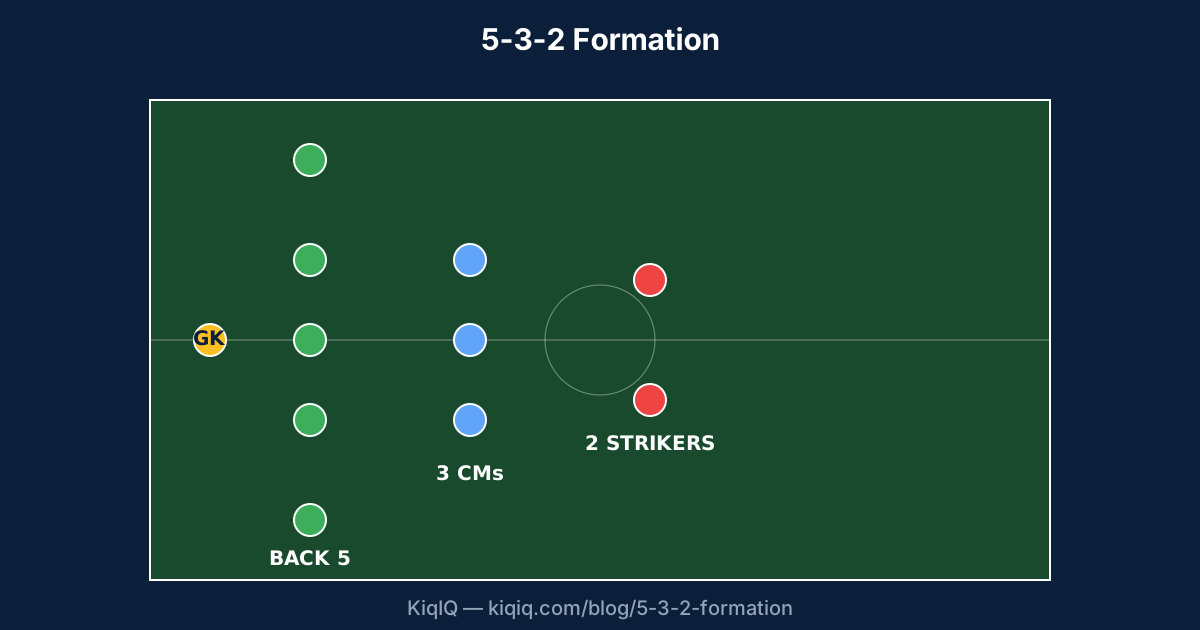
The 5-3-2 deploys five defenders (three CBs + two wing-backs), three central midfielders, and two strikers. We break down the structure, the defensive priority, and where it differs from 3-5-2.
 Tap to enlarge
The 5-3-2 is a defensively-focused formation: three centre-backs, two wing-backs holding position rather than overlapping, three central midfielders, and two strikers. It is functionally a 3-5-2 in defensive transition — the wing-backs drop deeper. Sides like Italy at Euro 2020 (won the tournament with a 5-3-2 / 3-5-2 hybrid) and Roberto Martínez's Belgium have used it as their tournament-defensive default.
The 5-3-2 structure
- Goalkeeper. Sweeper-keeper helpful given the high defensive line.
- Three centre-backs. Stopper + cover + ball-playing CB. Same as 3-5-2.
- Two wing-backs. Hold position deeper than 3-5-2 wing-backs. Defend first, attack second.
- Three central midfielders. One CDM + two box-to-box / shuttler midfielders.
- Two strikers. Often a target + counter-attacker pairing.
5-3-2 vs 3-5-2 is a tactical mindset. Same 11 players can shift between the two. 3-5-2 = wing-backs attacking. 5-3-2 = wing-backs holding. Coaches often start in 3-5-2 and drop to 5-3-2 when defending a lead.
Try it
The 5-3-2 on the pitch
Tap any player to read the role, and use the toggle to compare the shape against its closest relative.
Tap a player to read the role. Currently showing 5-3-2, attacking upwards.
Whether this is a 5-3-2 or a 3-5-2 depends entirely on where the wing-backs are standing at the moment you look.
Strengths of 5-3-2
- Defensive solidity. Five defenders create the most-stacked back line in mainstream formations.
- Two-striker counter-attack. When possession is won, two forwards run in behind together.
- Compactness. Easy to keep narrow vertically — back five + 3 CMs = 8-man defensive block.
- Numerical advantage in central midfield. Three CMs match or outnumber most opposition midfields.
Weaknesses
- No natural width in attack. Wing-backs hold position; the team becomes very narrow.
- Inviting pressure. Defensive mindset can let opposition camp in your half.
- Striker isolation. When the team can't connect midfield to attack, the two strikers see little of the ball.
When 5-3-2 works
- Defending a lead. Move from 3-5-2 to 5-3-2 in the final 20-30 minutes.
- Vs technically superior opposition. Tournament football vs higher-ranked sides — narrow the pitch defensively.
- Counter-attacking sides with two pacy strikers. Two-striker counter benefits from the spacing 5-3-2 leaves.
- Cup-tie second leg with an aggregate lead. Knockout football where conceding is more costly than scoring.
Famous 5-3-2 deployments
- Italy at Euro 2020. Roberto Mancini's 3-5-2 dropped to 5-3-2 to defend leads; won the tournament.
- Belgium under Roberto Martínez. 5-3-2 / 3-5-2 hybrid through 2018-2022.
- Antonio Conte's Italy (Euro 2016). 3-5-2 with disciplined wing-back drop — defensive 5-3-2 in shape.
- Premier League pragmatic sides. Burnley, Brentford, Sheffield United have used 5-3-2 vs top-six opposition.
Frequently asked questions
- What is the 5-3-2 formation?
- The 5-3-2 is a football formation with 1 goalkeeper, 5 defenders (3 centre-backs + 2 wing-backs), 3 central midfielders, and 2 strikers. It is a defensively-focused variant of 3-5-2 where the wing-backs hold position rather than overlapping into attack.
- How is 5-3-2 different from 3-5-2?
- 5-3-2 has wing-backs holding deep defensive positions; 3-5-2 has wing-backs pushing high to provide attacking width. The same 11 players can switch between the two: start in 3-5-2 attacking, drop to 5-3-2 to defend a lead.
- When should a team use 5-3-2?
- Three contexts: defending a lead in the final 20-30 minutes; playing against technically superior opposition (tournament vs top sides); counter-attacking with two pacy strikers. Italy used it at Euro 2020 to win the tournament.
- What is the main weakness of 5-3-2?
- No natural width in attack. With wing-backs holding position rather than overlapping, the team becomes very narrow. The two strikers can also become isolated if midfield can't connect through to them. 5-3-2 is a defensive baseline, not an attacking one.
References
- Jobs in Football · 5-3-2 Formation · Jobs in Football
- IFAB Laws of the Game · IFAB
- FIFA Training Centre · FIFA
- BBC Sport · Tactics Coverage · BBC Sport
Key terms in this article
Ask KiqIQ a follow-up
Get a live, data-driven answer powered by our live data feeds + KiqIQ's Poisson model. Try one of these prompts or write your own.
Try the calculators
Apply the concepts from this article with KiqIQ's free calculators.
Part of pillar
Tactical Intelligence
See every article in this knowledge pillar →
Related
Reviewed by a KiqIQ editor before publication. Spotted an error? Email editor@kiqiq.com. We follow our Corrections Policy.